
New Year's Resolutions: The Architecture of Psychological Motivation from a Clean Sheet to Resilience Strategies
The tradition of New Year’s resolutions is not just a product of modern consumer culture, it is a deep-rooted sociocultural and psychological phenomenon, with roots dating back to ancient civilizations. Archaeological and historical sources show that as early as 4,000 years ago, the ancient Babylonians were the first to record the custom of making promises to their gods at the beginning of the year, which coincided with the spring equinox and sowing for them. Their promises were usually pragmatic and moral – for example, to repay debts or borrowed agricultural tools. Later, in ancient Roman times, January 1st became a symbolic reference point, named after the god Janus. Janus, depicted with two faces, one looking into the past and the other into the future, ideally embodied the human state at a threshold moment in time: reflection on what has been done and hope for what will be.
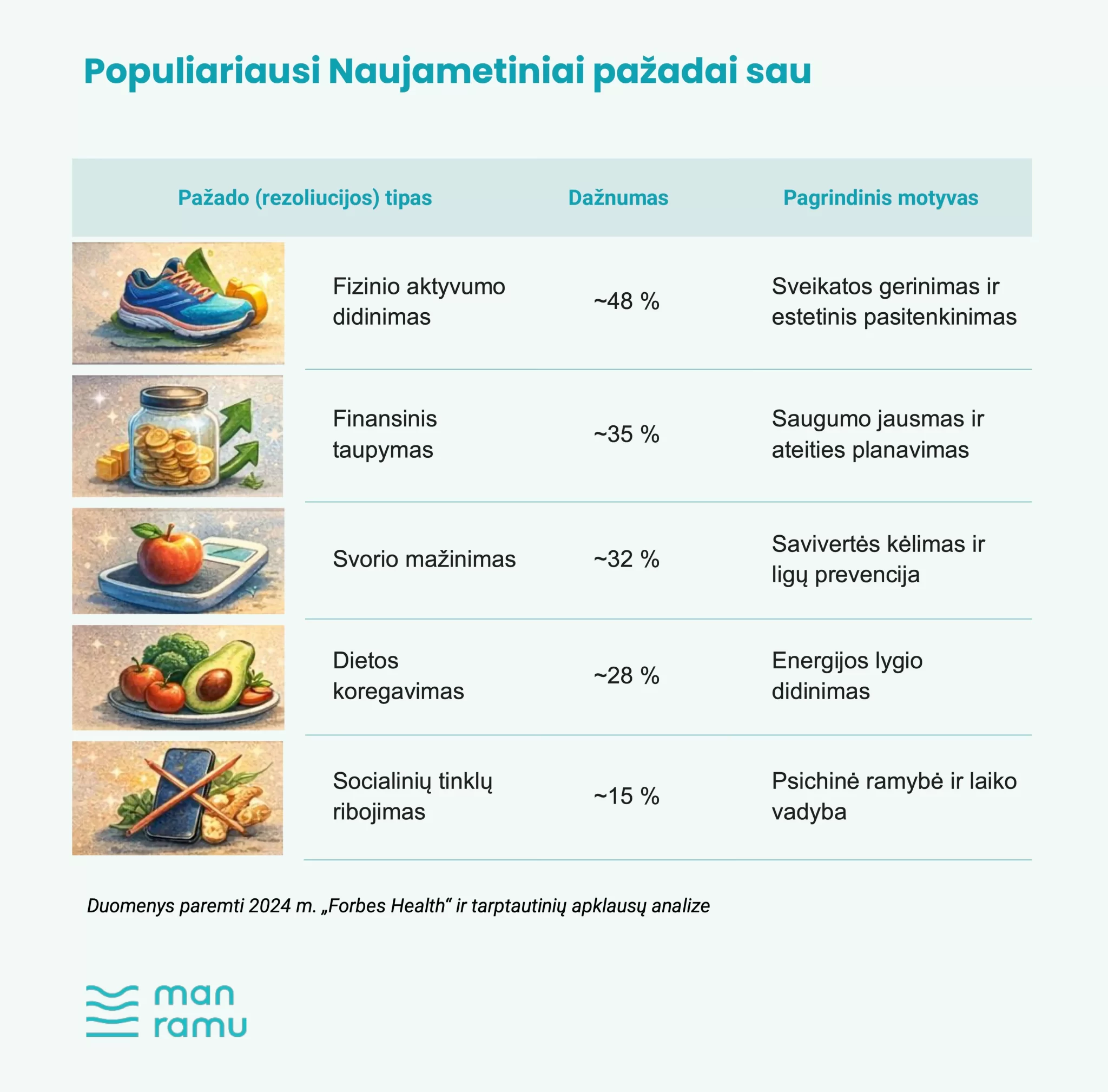
Today, this tradition has transformed into a mass phenomenon, the scale of which is staggering. According to statistics, every year about 40-50% of the US population and even 60-70% of UK citizens make lists of New Year’s resolutions. An analysis of the most popular resolutions for 2024 shows that people prioritize physical health, financial stability and time management in order to reduce the influence of social networks on their lives. However, behind this enthusiasm lies a complex psychological mechanism, which scientists call the “clean slate” effect, which gives us an illusory but extremely powerful opportunity to distance ourselves from past failures and start a new stage of life.
The "clean slate" effect: the psychology of time guidelines
The main driver of our desire to set ambitious goals on January 1st is the fresh-start effect, which has been extensively studied by Katherine Milkman and her colleagues at the University of Pennsylvania. The essence of this effect is the human tendency to use “temporal landmarks” to psychologically divide the flow of our lives into separate fragments or “chapters.” January 1st acts as the most powerful cultural time landmark, creating a sharp boundary between the “old me,” who made mistakes, and the “new me,” who has unlimited potential.
The psychological mechanism of time guidelines allows a person to distance themselves from past failures. When we look back on our past, we see an imperfect version of ourselves who failed to stick to a diet or complete tasks on time. However, a fresh start allows us to “write off” these failures to the entity of the past and see our current self as clean, not yet tainted by mistakes. This increases our sense of self-efficacy—the belief that we will succeed this time because “this me” is different from the one who stumbled last November.
The Neurobiological Basis of Commitment: Dopamine
Setting goals and achieving them is not just an abstract thought process; it has a concrete biological basis in our brain. When we set a new, attractive goal, the reward system in the brain is activated, the main mediator of which is dopamine. The very thought of success, visualizing the achieved result, causes the release of dopamine, which gives us energy and a high mood in the initial stage.
False Hope Syndrome: An Analysis of Failure

Despite the initial dopamine rush, most New Year’s resolutions fail. Psychologists Janet Polivy and Peter Herman have called this phenomenon “false hope syndrome.” It’s a cyclical process in which a person sets unrealistic expectations, experiences failure, but then returns to the same goals, interpreting the previous failure as accidental or related to insufficient effort.
False hope syndrome rests on four main pillars that distort our perception of reality:
- Speed: We expect quick results. Advertising and social media feed us success stories where changes happen in “30 days,” but biological processes and habit formation take much longer.
- Ease: We underestimate the effort it will take to achieve a goal. When planning, we are in a “cold” state, where emotions are not bothering us, but when carrying out the plan, we encounter “hot” states – hunger, fatigue or stress.
- Quantity: We believe we can change everything at once. Trying to quit smoking, start running, and learn a new language all at once is a surefire way to cognitive burnout.
- Consequences: We overestimate the impact of change on our overall happiness. People often think, “If I lose 10 pounds, my relationships will improve and I’ll get a promotion at work.” When the weight comes off but life’s problems remain, motivation fades because the expectation wasn’t met.
This syndrome is extremely dangerous for self-esteem. Every “broken” promise reinforces the internal narrative that the person is “unsuccessful” or “lacks willpower.” However, the truth is that the cause of failure is usually not a lack of willpower, but an improperly constructed goal and lack of a plan.
The Myth of Sisyphus and the "What the hell?" Effect
In modern psychology, New Year’s resolutions are often compared to the myth of Sisyphus – the eternal rolling of a stone up a hill, which rolls down again and again. This process is supported by a kind of “Sisyphean feedback loop”: negative emotions encourage negative thinking, which in turn leads to even greater disappointment.
One of the most dangerous states in this cycle is the “What-the-hell effect.” This is a phenomenon where one small breach of a promise (e.g., eating one cookie while dieting) sets off a chain reaction. The person thinks, “Well, since I already ruined my diet today, I might as well eat the whole package and order a pizza.” This stems from an “all-or-nothing” mindset. Instead of seeing progress as an average, people see achievements as fragile glass that, once broken, cannot be repaired, so they decide to wait for another “clean start”—next Monday or next year.
Strategic goal setting: from vision to automatism
To prevent New Year’s resolutions from turning into Sisyphus’s stone, psychologists recommend using scientifically based strategies that reduce dependence on fragile willpower.
The power of SMART criteria
Many goals fail because they are too vague (for example, “to be a better person” or “to exercise more”). The goal should be formulated according to SMART criteria:
- Specific: Be specific about what you want to achieve. Instead of “save,” say “put $100 into a savings account every month.”
- Measurable: How will you know you’re making progress? Numbers give your brain feedback and a dose of dopamine.
- Achievable: A goal should be challenging, but not mission impossible. If you’ve never run, promising to run a marathon in a month is a false hope.
- Relevant: Is this goal truly yours, or is it imposed by social media or the environment? Goals that align with personal values stick around longer.
- Time-bound: Set a clear deadline for interim results to create a healthy sense of urgency.
If-Then planning
One of the most effective cognitive strategies is the “If-Then” planning system developed by Peter Gollwitzer. Its essence is to decide in advance how you will behave when faced with an obstacle. This creates mental resilience that automates the response.
- Scenario: “If I get home from work and feel too tired to go to the gym, then I’ll put on my sneakers and just walk around the house for 10 minutes.”
- Scenario: “If I feel like ordering dessert at a restaurant, then I will first ask for a cup of mint tea.”
Such planning takes the pressure off willpower at a critical moment, because the decision has already been made in advance, when the brain was “cold” and rational.
Tips for visitors to the "Man ramu" platform
Readers who value security and peace of mind can apply these recommendations to their New Year’s resolutions so that they become a source of satisfaction, not stress.
1. Change the pursuit of “Perfection” to “Progress”
Peace of mind disappears when we try to achieve impossible standards. Just as insurance policies vary in their coverage, your efforts may vary depending on your life circumstances. Accept the fact that achieving 80% of your plan is a huge success, not a failure.
2. Use Temptation Bundling
Katherine Milkman suggests a method: allow yourself to indulge in a “sinful” pleasure (like watching your favorite TV series) only after you’ve done valuable but difficult work (like exercising or ironing clothes). This makes the hard work more welcome and reduces psychological resistance.
3. Invest in sleep and mental hygiene
Insurance companies know that a tired driver is a risk. Your goals are also at risk when you’re tired. Prioritizing sleep (7-9 hours) is a direct investment in your psychological resilience and willpower. Plus, a digital detox—screen-free time before bed—helps your brain rest from informational noise.
4. Learn to say “No”
Protecting your energy is just as important as protecting your assets. The ability to let go of commitments that don’t align with your values is the ultimate form of self-care. It frees up time for what really matters and prevents burnout.
Peace - dynamic equilibrium
When analyzing the psychology of New Year’s resolutions, it becomes clear that the biggest mistake is to view them as a one-time act, rather than an ongoing process. The “clean slate” effect gives us the initial momentum we need, but only realistic implementation framework development, continuity planning, and self-compassion ensure that the journey lasts beyond mid-February.
For the “Man ramu” community, peace should become not only a goal, but also a method. Peace in achieving goals is achieved by:
- Reducing uncertainty through detailed planning.
- By protecting yourself from failure through self-compassion and having a plan “B”.
- Focusing on what we personally control, rather than on environmental factors.
Real change doesn’t happen when we become “perfect,” but when we become “resilient.” Just as a good insurance policy provides a sense of security on the road, a well-crafted, values-based commitment provides direction and meaning to our personal growth. This year, may your commitments not be heavy stones but light, steady steps toward the peace we all seek.

When Animals Speak: A Magical Legend of Christmas Eve
Did you know that according to Lithuanian folklore, animals speak in human voices on Christmas Eve? Find out the meaning of this legend and why

Phones at the wheel: browsing is more dangerous than talking
Are you standing in a traffic jam or at a traffic light? Then you are participating in traffic – the Road Traffic Act prohibits taking

Fireworks and Pet Stress: How to Keep Dogs and Cats Safe During the Holidays
Fireworks are a serious test for pets. Learn how to help your dog or cat survive the noisy holidays without stress: practical tips, tools, setting

When do you renew your compulsory car insurance?
40% of drivers hesitate about when to renew their insurance. Find out why it’s not worth delaying and how to avoid risk and financial losses.
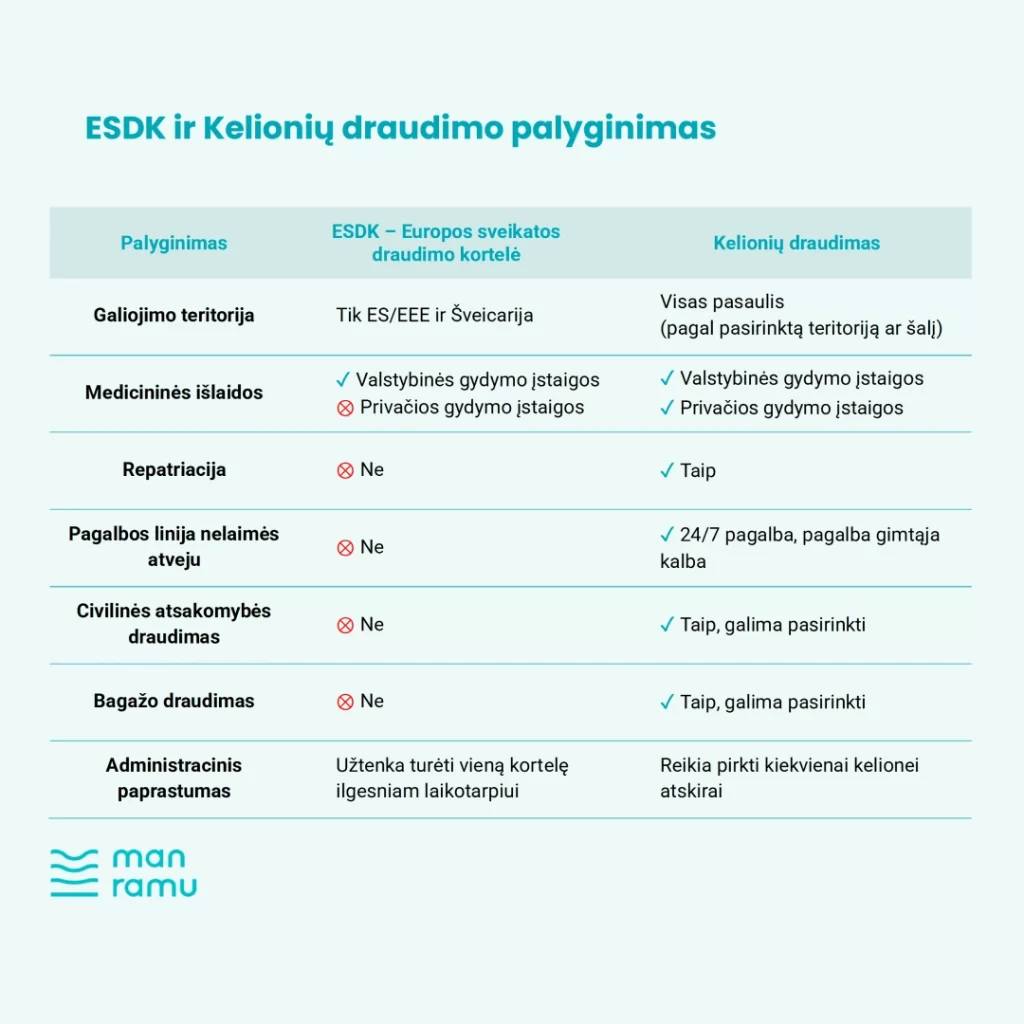
The European Health Insurance Card, often abbreviated as EHIC, is an official document issued to all citizens of the European Union, the EEA and

Which is better – to arrive 5 minutes early or to be 5 minutes late?
A five-minute margin reduces stress and the risk of errors. How to plan your morning, your route, and arrive on time without rushing.