Don't push a snowdrift with your car - you could lose more than just your bumper

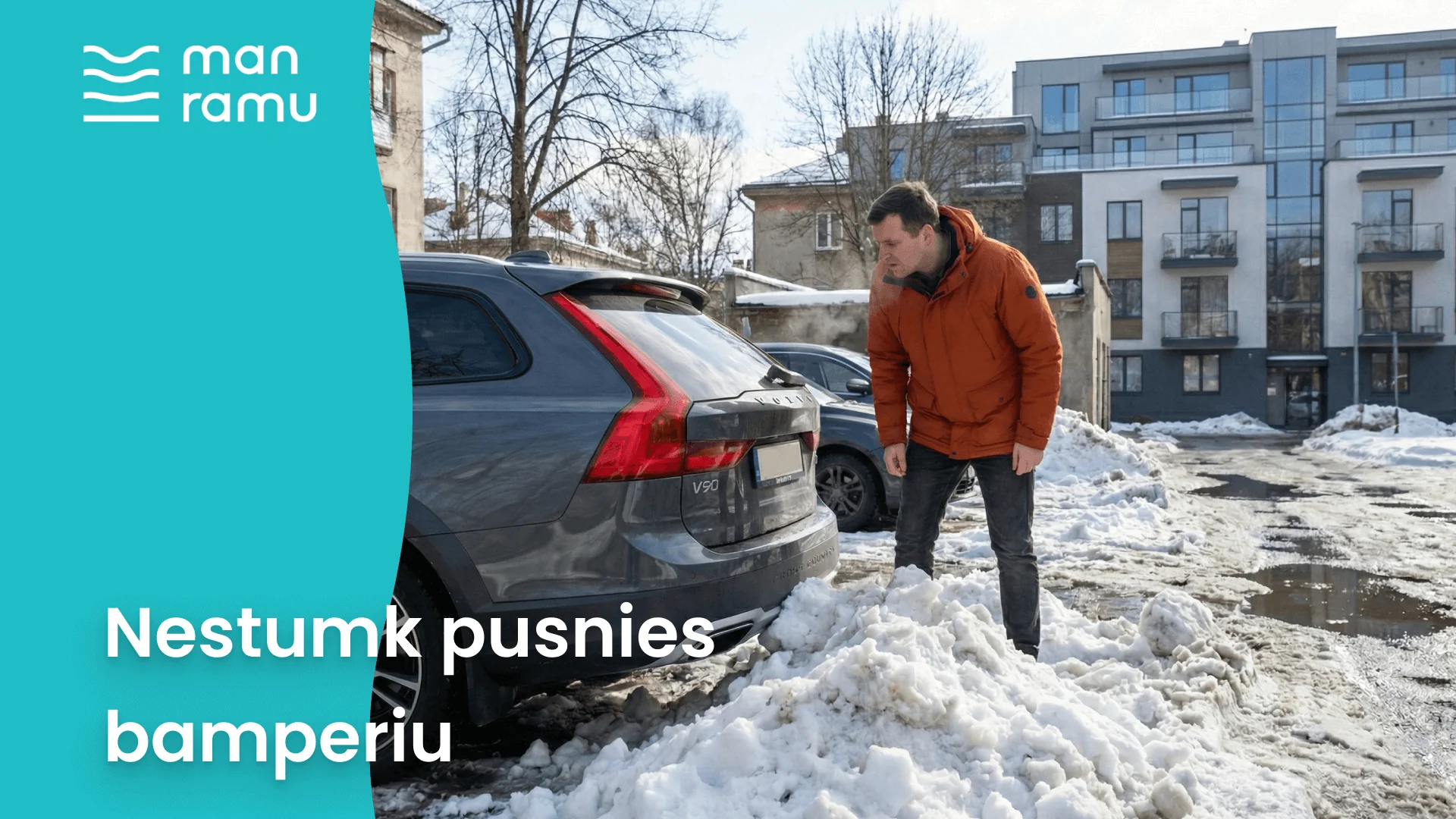
This winter in Lithuania there is a lot of snow, and piles of snow piled up in yards, parking lots and roadsides have become a daily occurrence. However, after rain, sleet, salting and even sunny days, these piles turn into hard, uneven blocks of ice. At first glance, it is just a pile of snow, but it is a common cause of car damage.

Casco insurance is valid in the event of a collision with a snowdrift

The practice of insurance companies shows that minor body damage increases during the winter period, especially damage to front and rear bumpers, protective plastic parts, underbody protection, and parking sensors.

The design of modern cars (produced between 2020 and 2026) is optimized for pedestrian safety and car aerodynamics. In extreme cold, polymer materials become more brittle. When hitting a frozen block of ice, the bumper can not only bend, but also break into sharp parts, which in turn can damage the cooling radiator, climate control condenser or electronic sensors.

Why are violations so common?

  1. Modern car design

Most passenger cars have low ground clearance, protruding plastic bumpers and aerodynamic trim. Even a small but solid block of ice can cause cracks or breakage of fasteners. In addition, the height of the snowdrift is often such that the impact force falls below the bumper’s strength zone.

  1. False impression of security

Soft snow poses no threat, but over time it hardens and becomes like concrete. A driver who is used to “leaning” on the snowdrift when parking may not appreciate the changed situation.

  1. Limited visibility

When reversing or approaching the edge of the sidewalk, a pile of fresh snow can hide a curb, stone, or frozen clod.

  1. Temperature fluctuations

Snow that melts during the day and freezes again at night becomes uneven and extremely hard. Such frozen snow formations are much more dangerous than freshly fallen snow.

Most common damage

  • Cracks or splits in the bumper plastic
  • Broken or loose fasteners
  • Damaged fog light or daytime running light zones
  • Damaged parking sensors
  • Damaged underbody protection or engine protection plate
  • Scratched paint

It is important to note that even visually minor damage can lead to expensive repairs if the entire bumper has to be replaced or a large area of ​​the bodywork has to be painted.

Practical tips for drivers

  1. Don’t drive “until contact”

You should avoid parking your car against a snowdrift. Stop earlier and leave a safe distance.

  1. Evaluate the structure of the snowdrift

If the snow looks gray, has a crust of ice, or is visibly hard, consider it an impassable obstacle. If possible, shovel the snow before maneuvering.

  1. Maneuver carefully in yards.

In apartment buildings, the snow often hides curbs, posts, or the bases of road signs. Move slowly and avoid sudden maneuvers.

  1. Don’t rely on parking sensors alone

The sensors may not “see” softer snow or may not work accurately due to icing. If in doubt, it is worth checking the situation after getting out of the car.

  1. Evaluate the car’s ground clearance

Owners of lower, sports, hybrid and electric cars whose battery protection is located on the bottom of the car should be especially careful.

  1. After contact – detailed examination

If you feel a bump or stronger resistance:

  • inspect the bumper,
  • check if any parts have come loose,
  • Make sure the parking sensors and cameras are working.

If you notice a coolant or engine oil leak, you cannot continue your journey and you must call for technical assistance.

Insurance aspect

Comprehensive insurance usually covers such damages if they are considered to be the result of a sudden and unexpected event. However, it is important to:

  • assess the size of the deduction – minor damages may not be financially profitable to declare;
  • comply with the procedure for documenting and reporting the event established by the insurer;
  • take photos of the scene of the incident and the damage.

Compulsory third party liability insurance will usually not help in such cases, as it is not a traffic accident with a third party.

Data from January and February 2026 shows that incidents involving collisions with frozen snow account for a significant portion of all recorded damages. This is not just aesthetic damage – ice blocks can damage critical vehicle components, which can mean thousands of dollars in repair costs for owners of modern cars.

Palygink draudimo bendrovių siūlomas kainas per kelias minutes!

Automobilio numerio tikrinimas
Įvesk valstybinį numerį
LT EU emblem