Lithuanian New Year's trips to exotic countries - let's not forget insurance
Most popular New Year travel destinations
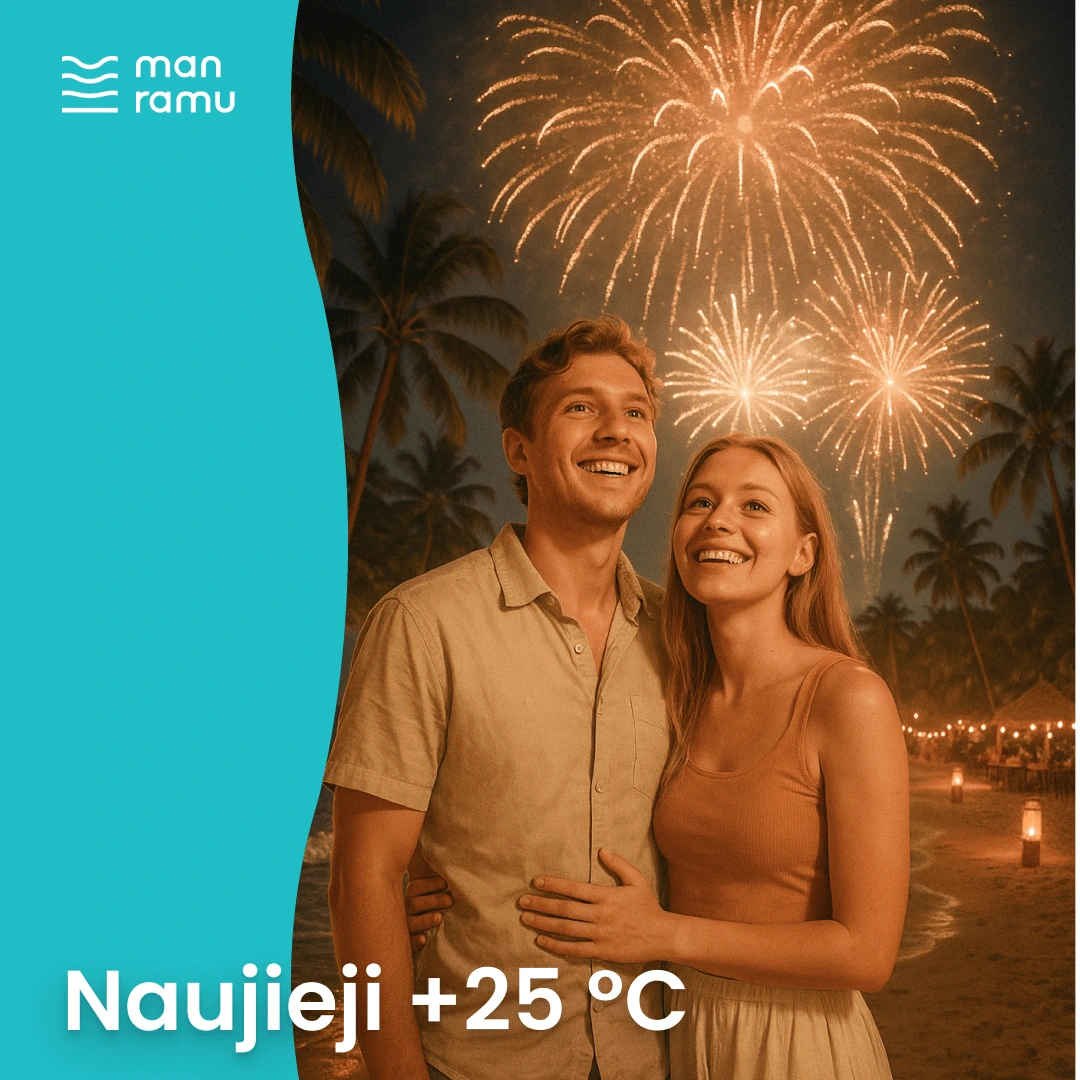
Warm and exotic countries. Recent surveys show that as many as 41% of Lithuanians would rather celebrate New Year’s abroad than at home. The most popular destinations are the warm climate and a sharp contrast with the Lithuanian winter. During the holiday period, Egyptian resorts (Sharm el-Sheikh, Hurghada) are particularly popular, as are the Canary Islands (e.g. Tenerife) and the United Arab Emirates. Egypt is popular for its guaranteed warmth – the temperature reaches around 25 °C in December, so many people are happy to rush to the beaches to welcome the New Year.

Typical health problems on exotic trips

Digestive disorders and poisoning. Statistics show that every third traveler to exotic countries experiences digestive tract ailments. The most common causes are food poisoning or intestinal infections due to poor hygiene and nutrition. Typical symptoms: acute diarrhea, stomach pain, nausea. Greens or fruits washed in local water, seafood, and ice cubes for cooling drinks increase the risk. Insurers emphasize that home remedies are not always effective, so help from local doctors or pharmacies is often needed.
Climate effects and adaptation. When moving from winter to tropical summer, common problems include sun/heat stroke, dehydration, and skin burns. When on vacation, the strength of the sun is often underestimated: sunscreen, shade, and fluid balance are forgotten, which is why cases of heatstroke occur. The first 1-2 days should be a “slow start“: more water, less direct sun, a lighter regimen.
Tropical infections and viruses. Hepatitis A is common in exotic regions – cases have been recorded in Lithuania where travelers “brought it back” from Thailand or Dubai. The infection is spread through contaminated food and water (ice cubes from tap water, street food). The most effective prevention is vaccination before traveling. Also worth remembering are influenza, typhoid, polio, diphtheria, tetanus – adults need revaccination every 10 years. Mosquito-borne diseases (dengue fever, and in some places malaria) are common in Southeast Asia and Africa. Although the risk of malaria is often low in resorts, dengue is quite common, so repellents and long-sleeved clothing in the evenings are essential.
Injuries and accidents. The most common cases: slips at swimming pools, water sports injuries, scooter accidents in Southeast Asia. A typical problem in Egypt is injuries from sea urchins or sharp corals, which can be complicated by infection, so it’s a good idea to have beach shoes when going into the sea.
Accessibility and quality of medical services in tourist areas
Accessibility of medicine. The resorts mainly have private medical centers adapted to foreigners: quick registration, English-speaking staff, modern equipment. In Egypt (Red Sea resorts) there are international clinics, but the treatment tactics may be unusual – drips for dehydration are more often used, antibiotics for intestinal infections. In Thailand (Bangkok, Phuket) – world-class hospitals (Bumrungrad, Bangkok Hospital), in Indonesia (Bali) – BIMC, Siloam, etc.; on more remote islands the infrastructure is more modest. In case of a more serious problem, it is worth calling the assistance service specified in the insurance policy for further actions or medical evacuation.
Prices. Services at resorts are expensive: a doctor’s consultation, tests, or an IV drip costs hundreds of euros, and hospitalization costs thousands. Therefore, it is important to have adequate insurance and contact your insurer/representative before going to the clinic so that you can be directed to a reliable facility.
EU card – not valid. In countries such as Egypt, Turkey, Thailand, Indonesia and generally outside the EU, the European Health Insurance Card (EHIC) is not valid. Without insurance, you will pay for everything yourself.
Travel insurance recommendations for exotic trips
A necessity, not a luxury. Travel insurance should be taken out before you leave. Without a policy, you will cover all costs yourself. The insurance should be valid from departure until return to Lithuania (inclusive) and cover all countries and transfers.
Risks and amounts. Recommended full basket:
- Medical expenses (at least €100,000);
- Personal Accidents;
- Third party liability;
- Luggage insurance.
When planning active entertainment (diving, hiking, water sports) – high-risk supplements are necessary.
Card insurance: Insurance offered on credit cards often has limitations on amounts, territory, or activities (e.g., valid only in Europe, does not cover family, limited amounts). Before your trip, review the terms and conditions and, if necessary, purchase an additional travel insurance policy to increase your protection (benefits are adjusted according to the rules of each policy).
If an accident occurs:
- Call the assistance service immediately – they will tell you where to go and help you with documents and bills.
- Follow the insurer’s instructions.
- Collect documents: medical certificates, tests, receipts – without them, the damage will not be compensated.
- Have a few hundred euros or dollars in cash or on a card – this will speed up services in case of minor problems; save all payment documents.
- Have your policy number and emergency contact information handy – it saves time in an emergency.
„Man ramu“ draudimo platformoje galite įsigyti kelionių draudimą, apimantį medicinines išlaidas, nelaimingus atsitikimus, asmens civilinę atsakomybę ir bagažo draudimą.

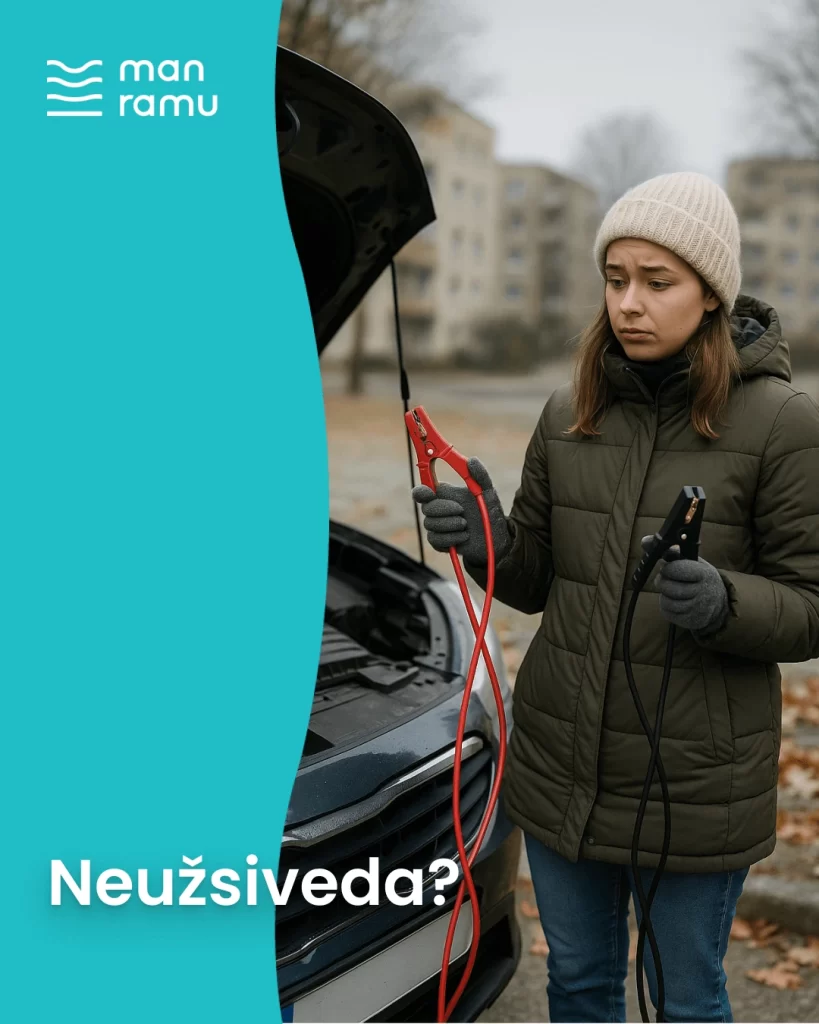
Battery check before winter: how to avoid unpleasant surprises on a cold morning
When the cold weather arrives, the car battery becomes the weakest link. Find out how to check its condition, when it is enough to charge
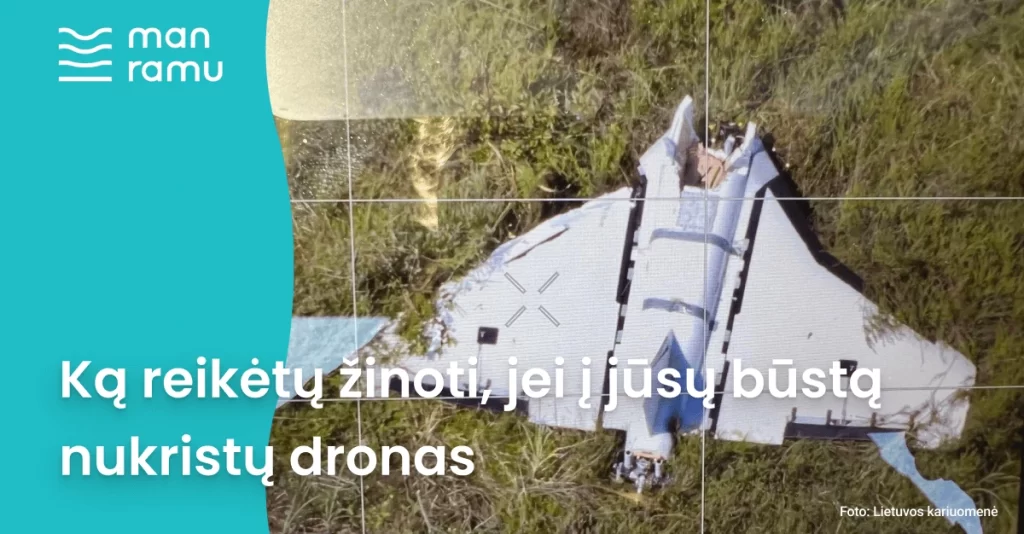
What you need to know if a drone crashes into your home
The press coverage of a drone of unknown origin and purpose (possibly Gerbera) that flew over Vilnius and landed at the Gaižiūnai training ground, which

It’s time to change your window fluid to winter: don’t wait for the cold
When the weather gets colder, take care of your car – replace your summer window fluid with winter fluid. Find out why it is dangerous
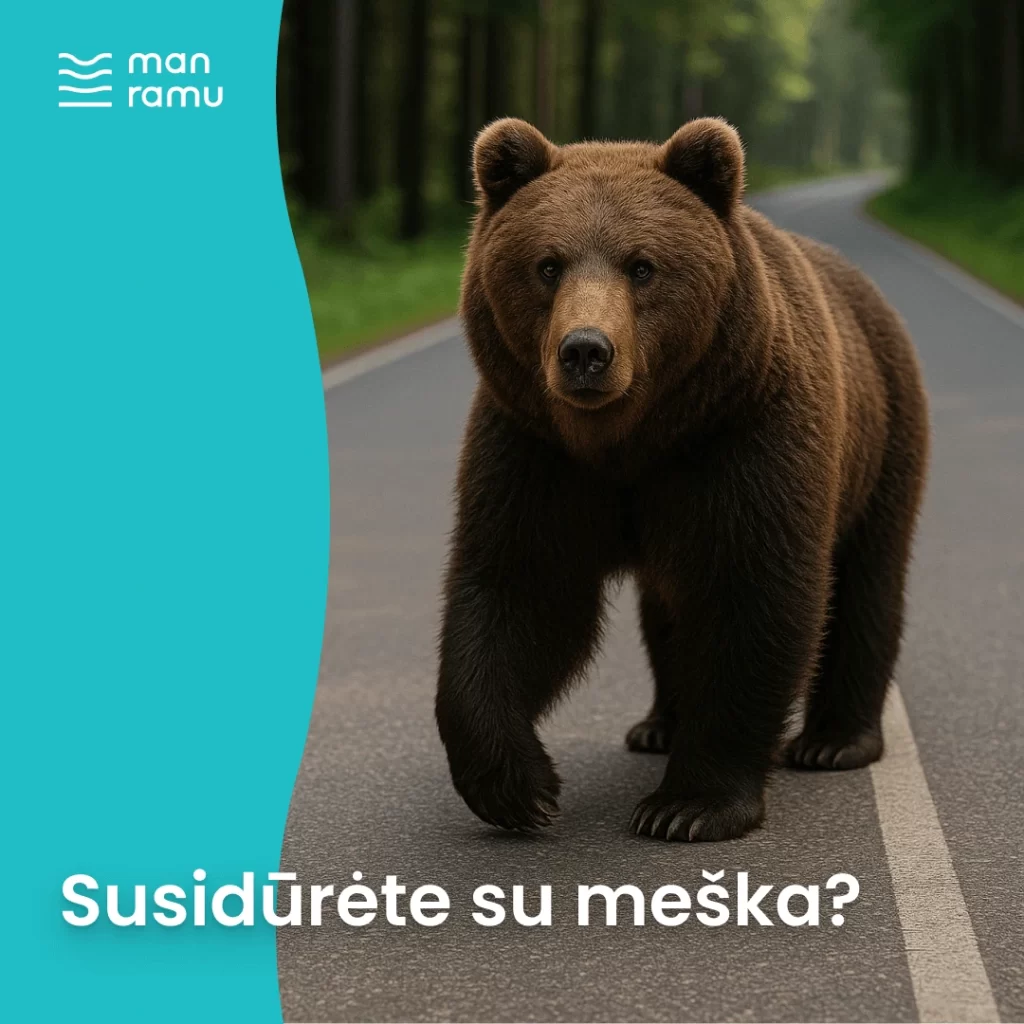
You encountered a bear – who will compensate for the losses?
Bears have returned to Lithuania. They seem to be interested not only in honey, but also in running around city streets and people’s yards.

