
Skiing injury risk and the impact of alcohol on travel insurance benefits
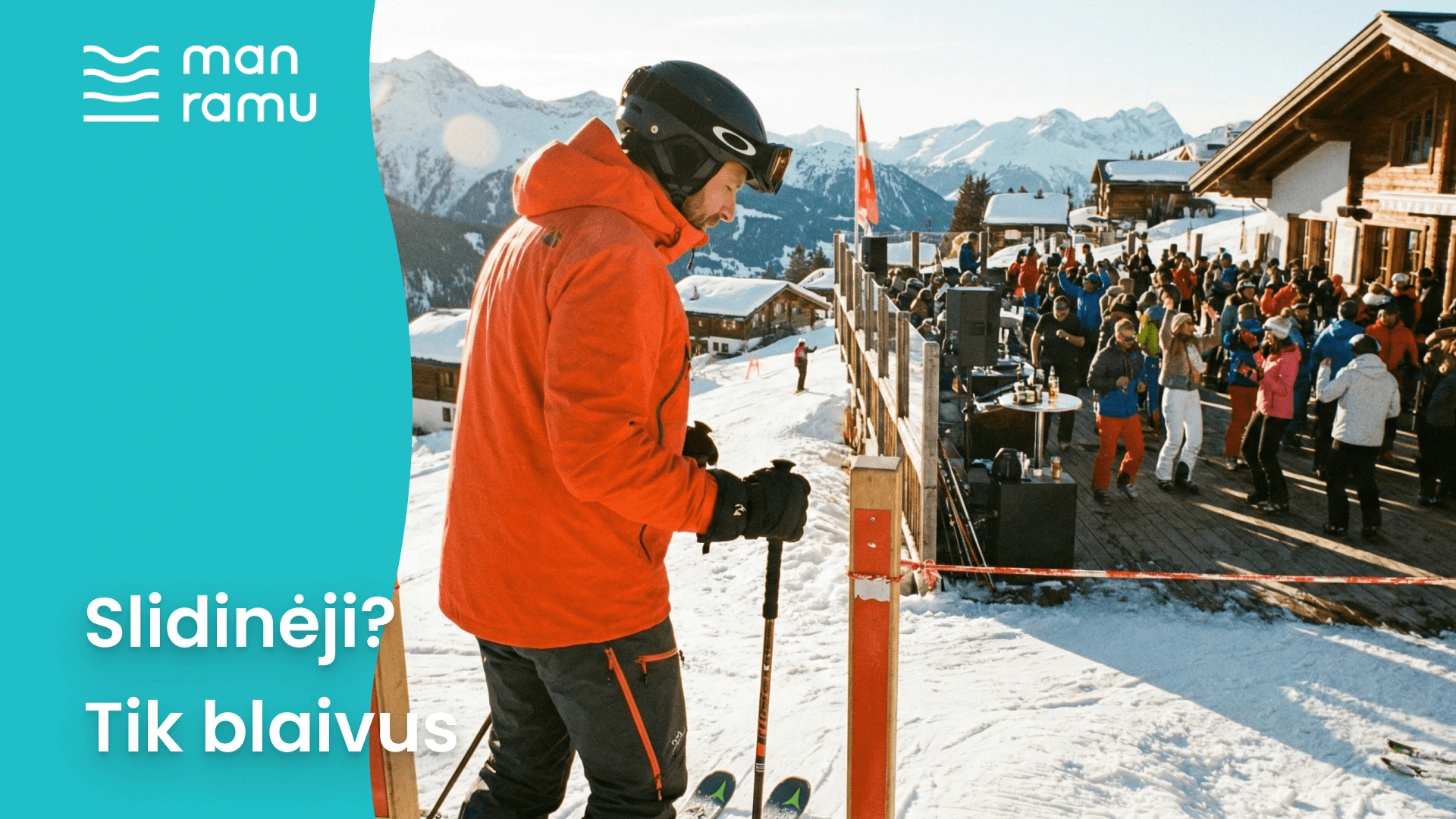
Below we review how the travel insurance rules of Lietuvos Draudimas, Balcia, Gjensidige, BTA, ERGO and Compensa VIG regulate the aspect of alcohol intoxication, paying special attention to skier injuries and the damages caused by them.
Medical expenses insurance: injuries sustained while intoxicated

Skiing injuries can be very expensive, and travel insurance usually covers the necessary treatment and transportation costs. For example, if you get injured in the mountains, you may need to pay for mountain rescue services, helicopter transportation, surgery or rehabilitation. In popular European resorts, a doctor’s examination and consultation alone can cost 500–700 euros; treatment of more complex injuries often exceeds 2–10 thousand euros. If medical evacuation by helicopter or repatriation to Lithuania is required, the costs can easily exceed 30,000 euros. However, alcohol intoxication in such a case can completely void insurance coverage. Insurance experts warn that it is not advisable to enjoy mulled wine before going down the mountain – in the event of an injury, insurance benefits will not be paid if the skier was intoxicated. In other words, an accident that occurred while intoxicated is considered a non-insurable event and compensation is not due.
In insurance rules, intoxication = non-insurable event
“Lietuvos draudimas”: Travel insurance rules provide that events will be recognized as non-insurable and insurance benefits will not be paid in cases of poisoning of the Insured with alcohol, narcotic or chemical toxic substances and medications not prescribed by a doctor;
Balcia: “We have the right not to pay an insurance claim if the event occurred because you were under the influence of alcohol, narcotics or other intoxicating substances and this had a causal relationship with the event that occurred”;
Gjensidige: “We do not compensate for financial losses that arise directly or indirectly: if the insured person was intoxicated with alcohol before, during or immediately after the event (up to 12 hours) (confirmed by medical documents or breathalyzer readings and the blood alcohol concentration exceeded 0.4 per mille), toxic, narcotic or other psychotropic substances, or used strong-acting medications without a doctor’s prescription, unless otherwise agreed. Consumption of alcohol or narcotic substances immediately after the event is considered to be drunk or intoxicated at the time of the event;”
BTA: In the case of medical expenses – expenses are not compensated and the event cannot be recognized as insured if the Insured died when the blood alcohol concentration was determined to be 0.4 per mille or higher; Also, expenses are not compensated if they are related to poisoning with alcohol, narcotic, psychotropic or chemical toxic substances and medications not prescribed by a doctor. In the case of civil liability, damage caused by the Insured while intoxicated by alcohol, narcotic, psychotropic or other psychoactive substances is also not compensated;
ERGO: General non-insurable events are considered to be events that were influenced by the insured’s use of alcohol, drugs or toxic, psychotropic and other psychoactive substances or strong medications used for the purpose of intoxication, or cases where the insured consumed alcohol or other intoxicating substances after the occurrence of an event that may be recognized as insured, before the doctor’s examination or avoided a check for intoxication or intoxication;
Compensa VIG: In the case of medical expenses, the Insurer does not compensate for losses incurred due to the use of alcohol, narcotics, toxic, psychotropic substances or medicines (except for cases where the medicines were used as prescribed by the attending physician, in accordance with the instructions for use). Non-insured events are considered to be the civil liability of the Insured for damage caused by the Insured to a third party while intoxicated with alcohol, narcotics, toxic substances, regardless of the degree of intoxication.
Lithuanian case law and medical examination rules have formed a de facto standard, which is used in civil disputes (including insurance): up to 0.4 per mille, a person is considered sober. It is important to understand that in case law, “intoxication” is understood not only as a number on the breathalyzer screen, but also as a psychophysiological state. If a blood test or breathalyzer test was not performed after the incident (e.g. in the mountains), the insurer can prove “intoxication” in other ways: through witness statements, medical records of behavior (staggering, incoherent speech, aggression).
It is worth noting that alcohol consumption does indeed significantly increase the risk of injuries. Statistics compiled by insurers show that as many as 63% of skiing injuries occur when a person has consumed alcohol before the injury. Scientists compare that skiing after drinking is as dangerous as driving after being intoxicated – reactions slow down, coordination deteriorates, and this threatens with collisions. Therefore, both doctors and insurers unanimously advise:
Third party liability damage: if others are injured and you are at fault
While skiing in the mountains, holidaymakers risk not only injuring themselves, but also unintentionally injuring others. Due to high speed and large crowds, collisions occur on the track – then other skiers or their property may be injured (e.g., breaking someone else’s inventory). Personal liability insurance (an additional part of travel insurance) in such cases compensates for the damage caused to the victims. Insurers remind that this protection is especially useful if a painful collision on the track occurs due to your fault. For example, Compensa recorded a case where a client accidentally hit another skier – she broke her arm and needed surgery. Civil liability insurance then covered the victim’s treatment costs, paying over 7 thousand euros in compensation. This protects the perpetrator from huge financial claims – medical treatment bills abroad can easily exceed several thousand euros.
Conclusions and advice
Seasonality of skiing injuries: According to insurers, the largest influx of reports of injuries is recorded in January-March, when Lithuanians actively travel to resorts in Italy, Austria, and France. The most common injuries are fractures of limbs, torn ligaments, and head injuries. Therefore, when preparing for the mountains, it is necessary to take care of appropriate travel insurance: medical expenses insurance (covers treatment, transportation, rescue) and civil liability insurance (covers damages caused by your fault to others). This way, you will be financially protected.
Alcohol and insurance – incompatible: Although it is tempting to relax with a glass of mulled wine or beer after an active day in the mountains, avoid alcohol until after skiing. From an insurance perspective, the best rule of thumb is 0 per mille on the slopes. Even a small amount of alcohol increases the risk of an accident and may result in no compensation. If an accident does occur, be sure to call for help and inform the insurer or its representative so that they can promptly organize the assistance process.
Responsible behavior is the best prevention. Follow the rules at ski resorts, assess your strength, wear a helmet and other protection. Be sober and alert – then your winter fun will be safe, and in case of an accident you can rely on travel insurance coverage without “fine print” clauses. Insurers emphasize that safe behavior and responsibility help prevent both health injuries and financial losses.
A vacation in the mountains can be enjoyable and relaxing if you take care of yourself – and avoid risking your own well-being and that of others over a few glasses of alcohol.
„Man ramu“ draudimo platformoje galite įsigyti kelionių draudimą, apimantį medicinines išlaidas, nelaimingus atsitikimus, asmens civilinę atsakomybę ir bagažo draudimą.

Washing your car in winter: myths, facts and tips
Regular car washing in winter helps prevent corrosion, improves visibility and ensures road safety. Learn how to do it right and where the dangerous myths

It’s time to change your window fluid to winter: don’t wait for the cold
When the weather gets colder, take care of your car – replace your summer window fluid with winter fluid. Find out why it is dangerous

Children to school – drivers to traffic jams. How to stay calm?
September brings traffic jams to cities. Advice from insurers and psychologists on how to plan your route, manage stress, and stay safe near schools in

Bare ice, black ice and slush – dangerous winter phenomena on Lithuanian roads
Black ice, slush and slush are the most dangerous winter phenomena on the roads. Find out how they differ, how they form and how to

Learn why we make New Year’s resolutions, why they often fail, and how, using the recommendations of psychologists, to create realistic goals, reduce stress, and

Fire safety recommendations for Christmas trees and home decorations
Ugniagesiai kasmet sulaukia iškvietimų dėl kibirkščiuojančių ar užsidegusių girliandų, liepsnojančių vainikų ar nuo žvakių įsiplieskusių gaisrų. Todėl būtina laikytis priešgaisrinės saugos patarimų.