
Ergo has jumped on the AI-powered interactive photo submission bandwagon, but not all insurers are there yet
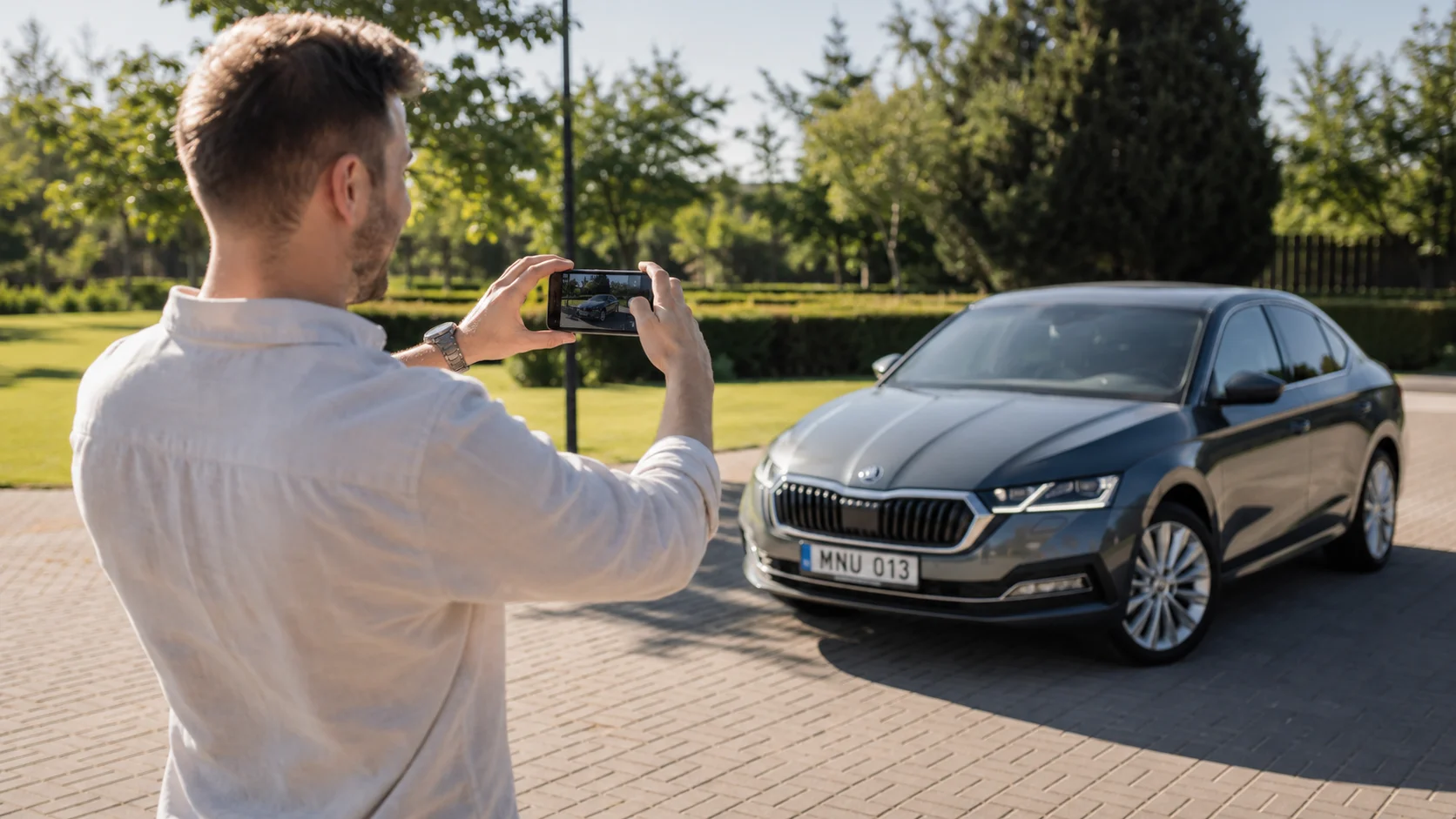
A change is quietly taking place in the Lithuanian Casco insurance market, which many customers do not even notice – the way the initial condition of the car is recorded after concluding a contract has changed. Instead of a visit to a manager or sending photos by e-mail, artificial intelligence (AI) is increasingly being used, guiding the client through the photo taking process in real time directly on the phone. But not all insurers are on this train, and even those who have boarded it are riding on different tracks.

Pioneers: BTA, then Swedbank, now ERGO
BTA was the first to introduce this solution to the market – back in 2022, integrating the Estonian startup DriveX tool into its IRIS system. The process is simple: a client who has concluded a CASCO contract receives a link, takes a photo of the car according to interactive instructions in the browser, and the photos are automatically attached to the insurance contract – without the help of a manager and without manual lifting.
A few years later, Swedbank followed suit. In August 2025, the bank announced that it had also chosen DriveX and implemented it for all its insurance customers in Lithuania, Latvia, and Estonia – the customer takes photos directly in the bank’s smart app or online bank.
Now ERGO has joined this group, but it has chosen not DriveX, but a competitor – CamCom Technologies’ solution based on TriNetra™ technology that allows customers to conveniently and quickly perform remote inspections using their smart devices. It is important to note a couple of nuances here. Firstly, ERGO’s solution includes not only CASCO, but also property insurance – with a separate property module for interior, exterior and other object photos. Secondly, the photos are processed by AI models that assess the condition of the object, and the data is automatically transferred to ERGO’s internal “DIS Sales” “ sistemą, papildomai automatiškai atpažįstant matomus pažeidimus. Tad ERGO žingsnis – ne tik patogesnis klientui, bet ir nukreiptas į žalų bei sukčiavimo prevenciją.
Why DriveX and CamCom are different from the app version

The key advantage of these solutions is that they work as temporary plugins. The customer does not need to install anything or register: by clicking on the received link, a mobile environment opens, where a photo of the car is taken with instant feedback (whether the entire side is visible in the frame, whether the lighting is sufficient, whether the VIN has been recognized), and then simply closing the window leaves no “tail” behind.
Most other Lithuanian insurers are not yet jumping on the AI bandwagon, but are improving old methods – allowing the client to send photos by email or upload them to self-service. Essentially, it’s the same logic as a decade ago, only packaged more conveniently.
For example, Lietuvos draudimas allows you to submit photos in a mobile app or self-service portal: the first six photos are required, the system validates them (a suitable photo is marked with a check mark, an unsuitable one with a question mark), up to 20 photos can be submitted in total, and they can be uploaded immediately or within 5 days. The solution is modern and has automatic verification, but it requires connecting to the insurer’s own digital environment – it is easier than a visit, but more complicated than a one-time plugin.
Balcia, which fosters the image of a digital insurer, tried to radically solve the issue of photos – not to require them at all. However, market realities forced it to also request photos when concluding a CASCO contract. Photos can be submitted via the app or sent by simple e-mail according to the photography instructions.
A brief history: from insurance agent to artificial intelligence
It is worth recalling how it used to be. Historically, the initial photos of the car had to be taken by the insurance representative – the client would come to show the vehicle. Later, gradually, the responsibility was transferred to the client: they were allowed to submit photos themselves by email . AI-led solutions are the third stage of this evolution, where the process is overseen not by a human, but by an algorithm.
One rule has remained the same throughout all stages: photos are usually not required when the contract is continued without interruption – after all, the insurer already knows the condition of the vehicle from the previous period.
Carrot for stick: sanctions for not submitting photos
Photos are not just a formality – they record the condition before the insurance comes into effect and protect against previous violations of illegal insurance. Therefore, if photos are not submitted on time, insurers have the right to apply sanctions, most often an increased deductible (franchise). Insurers provide in their rules that if photos are not submitted and an insured event occurs, an additional deductible of EUR 300 or up to three times the amount stipulated in the contract will be applied. This is an effective incentive for the client to complete the process on time.
Where is the market heading?
It seems that the Lithuanian CASCO insurance market is divided into three camps: AI-driven temporary plugins (DriveX – BTA and Swedbank; CamCom/TriNetra – ERGO), proprietary digital environment with validation (Lietuvos draudimas, Balcia) and klasikinis el. paštas ar atstovas .
The most interesting question is what the rest will do. Developing your own AI solution is expensive and time-consuming, but two existing photo submission providers are already working on a Baltic scale and have experience with integrations. It is likely that the next choices will be determined not so much by technology as by which ecosystem – DriveX or CamCom – the insurer wants to join. And for the customer, let’s hope, this will mean an increasingly seamless insurance experience and fewer emails with photos.

Marius Jundulas
- Also read

Rubber or textile car mats in winter?
We compare rubber and textile mats for winter: protection from salts, drying, footwear, aesthetics, care and recommendations.

Lithuanian New Year’s trips to exotic countries – let’s not forget insurance
Lithuanian winter holiday trips to Egypt, Thailand, Indonesia, Maldives and other exotic countries: the most popular destinations, price trends, common health problems and why it

Driving abroad: how to prepare for a car trip around Europe?
Learn how to prepare for a family road trip around Europe: what documents are needed, how to prepare the car, and why travel insurance is